


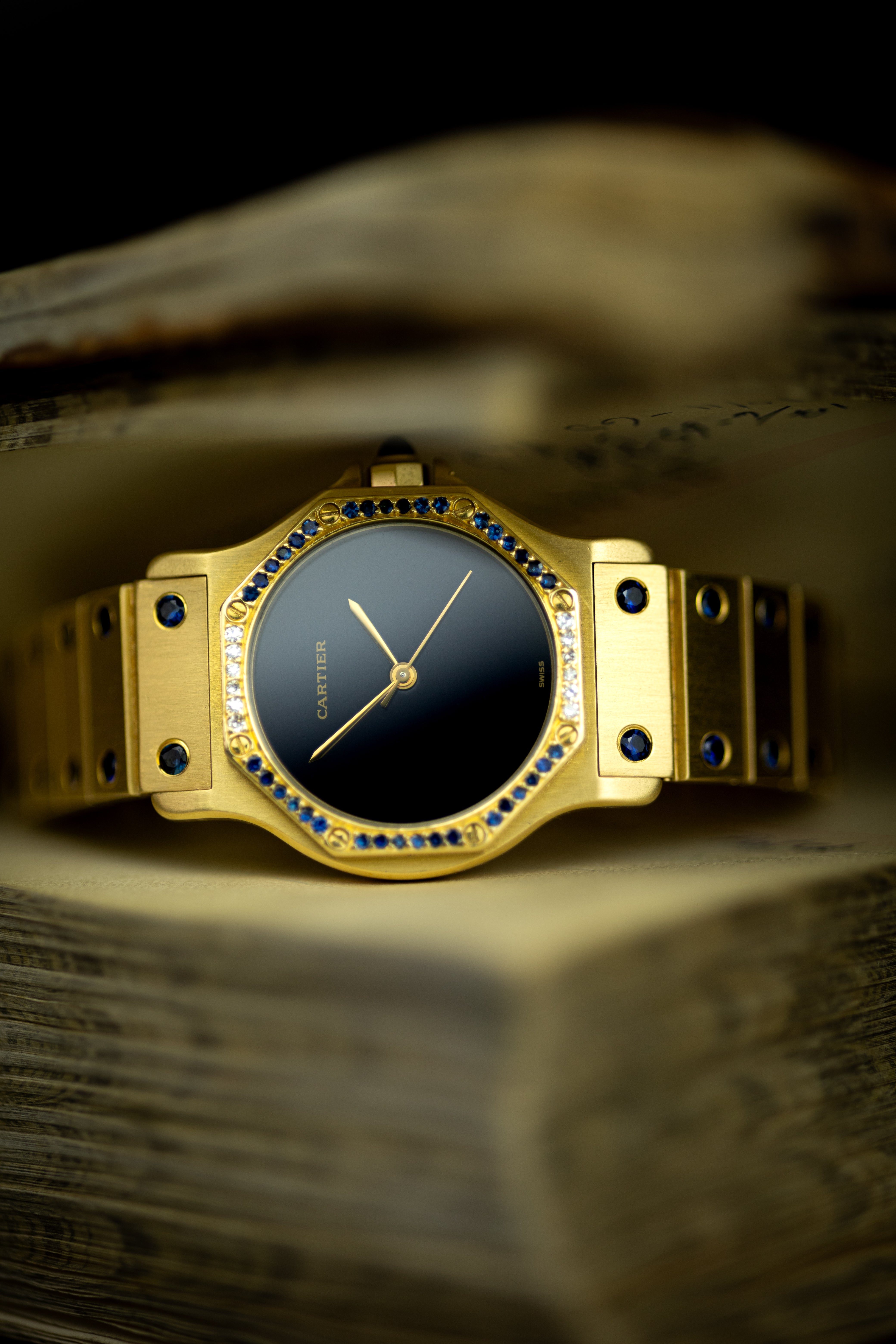

Cartier Santos Ronde Octagon 'Or Massif' Sapphire
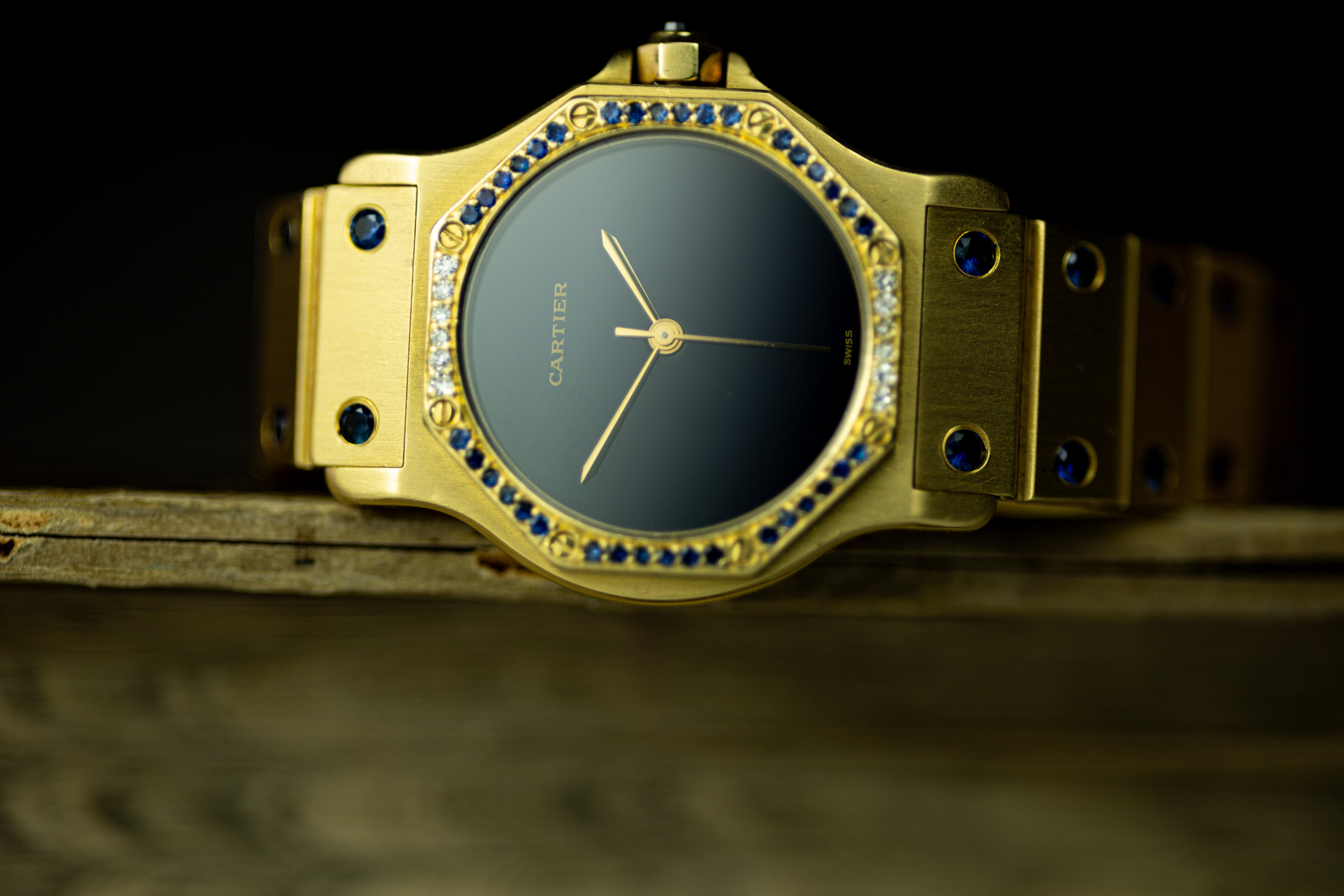
This Cartier Santos Ronde Octagon ‘’Or Massif’’ (meaning massive gold) is a beautiful oddity in the world of watches. With the reference 2965, this fully-automatic timepiece is factory-set with multiple sapphires and diamonds partially throughout the bracelet (princess-cut) and fully set across the bezel with a size of 30mm, considered a largest (and most collectable) size of the model. The piece-de-resistance is, of course, the agate dial, which is cut from stone and exudes a beautiful blue texture, lacking any unnecessary indicators on the dial except for the Cartier signature and Paris print. While not a part of Cartier’s usual catalogue, this piece may have been specially commissioned for a select client when the model type was in production in the 1980s.
Case: 18ct yellow gold
Movement: Automatic
Strap: 18ct yellow gold
Diameter: 30mm
Height: 9mm
Water resistance: 3 ATM
Year: 1980s
Accessories:

Our Values
The Ole Mathiesen values are born from the Scandinavian virtues of modernism which focus on functionalism and simplification of form. The purpose is to improve the daily life to create harmony and affordable pleasure inspired by durability functionality and reliability - as well as less tangible values such as simplicity and equality. The values in an Ole Mathiesen watch are discrete classic timely as well as timeless - never ostentatious.
Our Focus
Ole Mathiesen applies the Danish design principles of simplicity, quality and focus to one of our most precious assets: time. The simplicity of the Ole Mathiesen watch calls for the ability to focus on what matters. And in the design process the watchmakers ask themselves: How can we design to last a century rather than a season? Always with the focus: the design is not finished when there is nothing left to add but rather when there is nothing left to remove.
Our Trademark
The unmistakable trademarks of Ole Mathiesen’s design are indebted to the three concepts on which his watch design was based – honesty tradition and quality. The design of Ole Mathiesen’s classic watch from 1962 builds on the design tradition that has its roots in functionalism and it represents the very essence of a timekeeping instrument being both timeless as well as timely offering a harmonious interaction between the watch and the wearer.